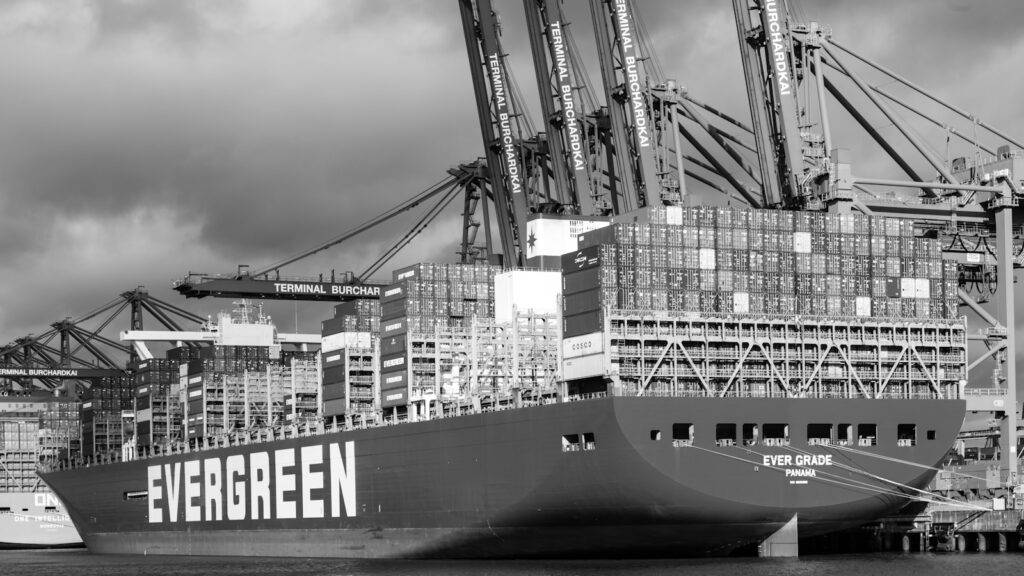

International trade is entering a new era defined by climate-aligned regulation, transparency standards, and a growing expectation that companies quantify and account for their environmental impact. While national governments have implemented domestic decarbonisation measures for years, the last 24 months have seen a significant shift toward regulation aimed at imported goods. This marks a new phase in the relationship between sustainability and commerce—one where emissions and compliance can materially affect competitiveness, access to markets, and long-term margin planning.
The Policy Landscape Is Changing Fast
Businesses supplying steel, aluminium, fertilizers, cement, electricity, and other emissions-intensive products are now operating under a new set of rules that go beyond voluntary disclosures. Carbon intensity is no longer just a sustainability talking point—it is becoming a quantifiable cost variable that stakeholders must manage. As a result, supply chain mapping, emissions reporting, and product-level environmental data are becoming strategic assets.
For importers and manufacturers, the pressure to build data-driven internal systems is rising. In many cases, the most significant challenge is not the environmental objective itself but the logistical complexity required to meet reporting obligations. From upstream supplier data collection to emissions factor verification, companies are discovering that carbon compliance demands the kind of operational infrastructure historically reserved for financial accounting.
Supply Chain Transparency as Competitive Advantage
Supply chain transparency is proving to be more than a compliance exercise. Better environmental data can support strategic pricing, unlock partnerships, and mitigate regulatory risk. For investors, lenders, and insurers, the ability to calculate carbon exposure is increasingly embedded into due diligence processes. ESG scores, once seen as opt-in, are converging with financial assessments, revealing a future where sustainability metrics influence cost of capital.
At the same time, companies with robust emissions reporting capabilities can leverage their data for brand differentiation. Buyers—particularly in B2B environments—now weigh climate performance when assessing suppliers. This trend is strikingly consistent across heavy industry, construction, and advanced manufacturing verticals.
A Single Use of the Keyword
Many organisations now seek advisory and administrative guidance to manage their compliance duties, particularly as early adopters prepare for broader rollout phases. For importers in Europe, this may mean establishing internal systems or outsourcing external expertise for matters such as cbam support as they navigate reporting cycles and emissions tracking requirements.
How Industry Is Responding
While early concern centred around operational burden, recent developments show that businesses are adjusting quickly. Large manufacturers are integrating lifecycle emissions data into enterprise software stacks, while mid-sized importers are partnering with consultancies to manage reporting workflows.
Technology is also moving fast. Software platforms capable of calculating embedded carbon across multi-tier supply chains are gaining traction, and there is a noticeable trend toward real-time emissions accounting. As regulatory timelines tighten, automation will likely be critical. Companies without digital data capture risk being structurally disadvantaged, particularly when audits are introduced.
The Global Ripple Effect
Although current frameworks are region-specific, the ripple effects are international. Non-EU manufacturers selling into EU markets—ranging from steel producers in Asia to fertilizer suppliers in the Middle East—are now being asked to quantify emissions at a granularity that was previously unheard of. In this way, regional policy is indirectly reshaping production standards worldwide.
There is also geopolitical weight behind emissions-based trade measures. Governments are increasingly framing industrial decarbonisation as an economic strategy, not simply an environmental one. Countries with cleaner energy grids and lower-carbon manufacturing processes may gain competitive advantage, while slower-moving regions face the risk of being priced out of international markets.
What Businesses Should Prepare For Next
The transition toward carbon-priced imports is still in motion, but several steps are becoming essential:
- Map Supply Chains — Identify upstream suppliers and emission hotspots.
- Collect Reliable Emissions Data — Prefer primary data over generic emissions factors.
- Implement Internal Reporting Systems — Structure emissions estimations like financial accounts.
- Assess Cost Exposure — Model scenarios under different carbon-pricing assumptions.
- Audit Data Quality — Anticipate verification requirements and third-party scrutiny.
- Engage Suppliers Early — Many upstream vendors are behind on data readiness.
These steps require both administrative capacity and strategic attention. Those who act early can reduce business disruption, improve cross-border access, and potentially gain tariff-based competitive leverage.
Sustainability Meets Profitability
What makes the current moment particularly interesting is that it is forcing companies to operationalise sustainability in commercially viable terms. Regulators are effectively turning carbon into a measurable cost item rather than an abstract environmental concept. For the first time, emissions are influencing pricing, investment cycles, and supply chain restructuring in a systematic way.
The coming decade will likely determine how persistently these mechanisms influence global trade. But if early signals are reliable, emissions-aligned compliance is moving from policy experiment to economic infrastructure.